The History of Gambling in Europe: From Roman Dice to the Riviera
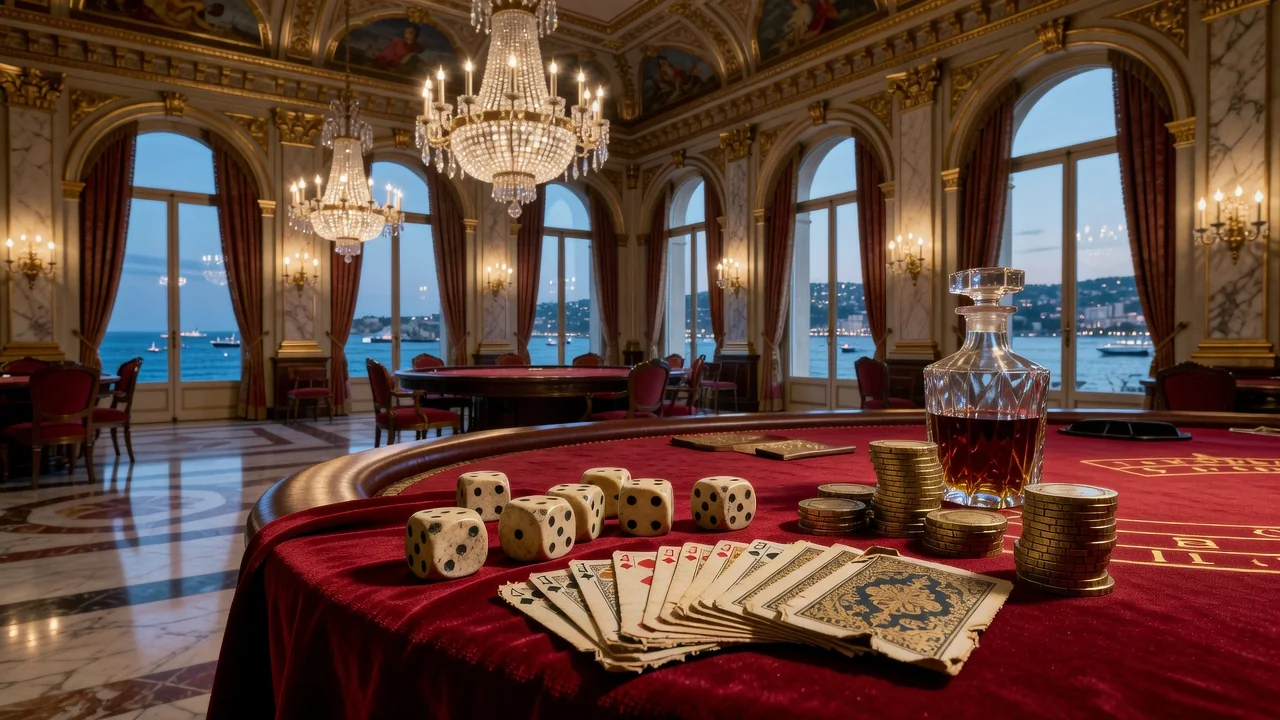
Europe invented the casino — the word, the institution and most of the games. Every roulette wheel spinning today, from Macau to Las Vegas, descends from a lineage that runs through Roman taverns, Venetian ridotti and German spa towns. Understanding that history is not nostalgia: it explains why Europe’s casinos still look, feel and behave unlike anywhere else on earth.
This is a tour through two millennia in seven stops — from dice in the forum to the regulated, RFID-chipped floors of 2026. Each era left buildings you can still walk into, and several of them are reviewed on this site.
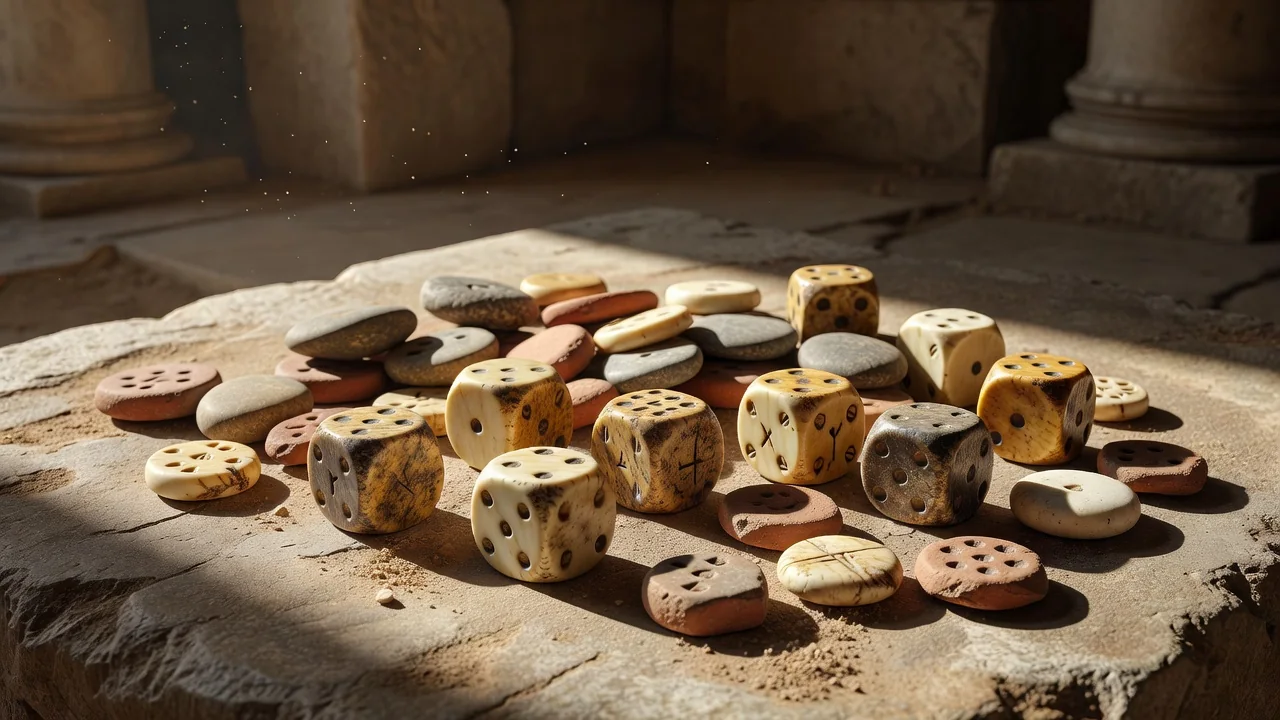
Roman Dice: Gambling Before the Casino
Romans gambled obsessively and illegally. Dice games — alea — were banned except during Saturnalia, which only moved the action into taverns, bathhouses and the back rows of the circus. Emperors from Augustus to Claudius were documented players; Claudius reportedly wrote a treatise on dice and had his carriage fitted with a gaming board.
The Roman legacy is not the games themselves but the pattern: gambling as a social constant that law tolerates, taxes or drives underground — a cycle Europe has repeated ever since. Astragali (knucklebones) and tesserae found from Britain to Syria prove how universal the habit was across the empire.
Lotteries, Cards and the Medieval City
Playing cards reached Europe in the 14th century, probably via Mamluk Egypt, and spread with astonishing speed — by 1400, card makers’ guilds existed from Ulm to Lyon. The same century saw the first public lotteries in the Low Countries, raising money for town walls and poor relief: gambling as civic finance, an idea that never left Europe.
By the 1500s, every European court had its gaming tables and every city its ordinances against them. The tension produced the next invention: instead of chasing gambling out of town, why not give it one licensed, elegant room?
1638: The Ridotto and the Birth of the Casino
Venice opened the Ridotto in 1638 — the world’s first state-sanctioned gambling house, a wing of the Palazzo Dandolo where masked nobles and foreign merchants played biribi and bassetta under government supervision during carnival season. It ran for 136 years before the Great Council closed it for ruining too many fortunes.
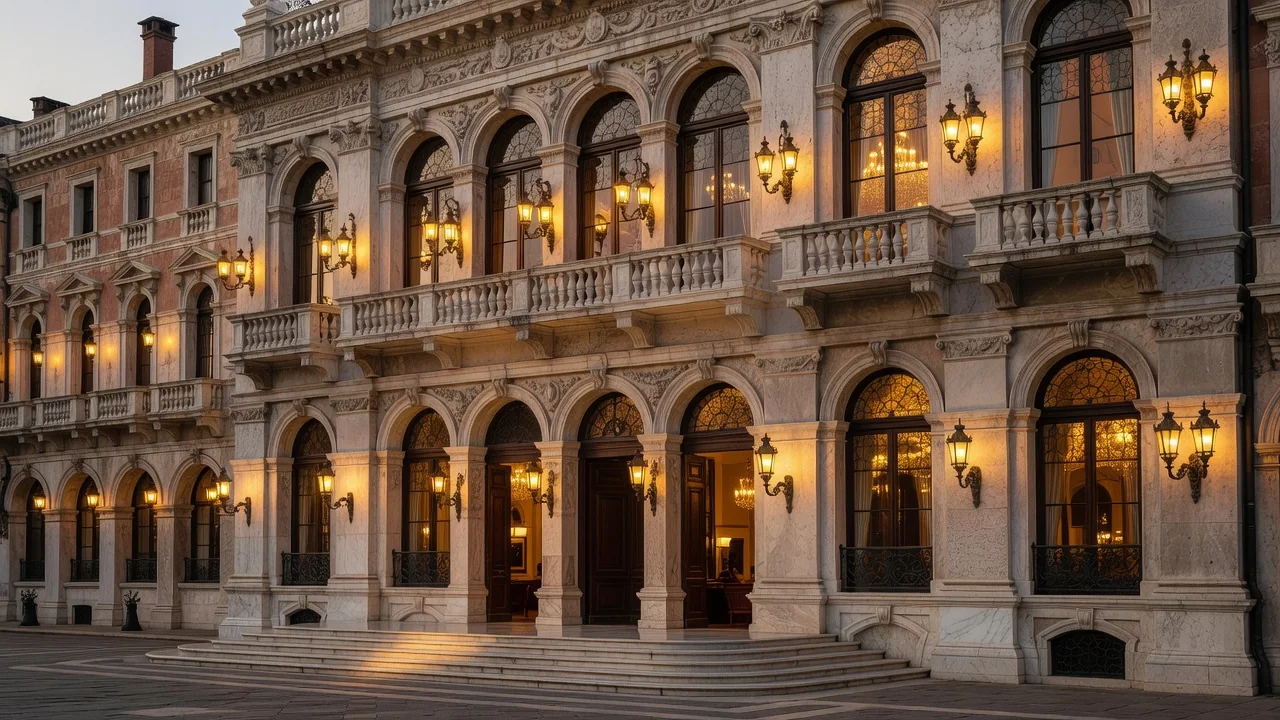
The Ridotto’s model — licensed rooms, social mixing, the house taking its cut — is the direct ancestor of every casino since. Fittingly, the city still keeps the flame: Casino di Venezia, operating since 1638’s legacy resumed in the 20th century, calls itself the world’s oldest casino and fills a Grand Canal palazzo that Wagner once called home. The Ridotto formula distilled to four innovations:
- State licensing instead of prohibition — gambling brought into the open and taxed
- A dedicated, elegant venue rather than tavern back rooms
- Social mixing of nobility and merchants under one roof
- House-banked games with published rules, supervised by officials
The Spa-Town Century: Spa, Baden-Baden, Wiesbaden
The 19th century moved gambling from city to resort. Europe’s elite already travelled to take the waters; the casino gave them something to do after dinner. Casino de Spa in Belgium traces its gaming rooms to 1763, making it the oldest continuously operating casino tradition in the world, and the German Kursaale followed: Baden-Baden, Wiesbaden, Bad Homburg.
Baden-Baden became the era’s summit — the “summer capital of Europe”, where Dostoevsky lost the money that became The Gambler and Marlene Dietrich later called the casino the most beautiful in the world. When Prussia banned gambling in 1872, the crowds simply moved west.
| Era | Place | What it gave gambling |
|---|---|---|
| Antiquity | Roman Empire | Dice culture, the ban-and-tolerate cycle |
| 14th–15th c. | Low Countries, German cities | Playing cards, civic lotteries |
| 1638 | Venice — the Ridotto | The first licensed gambling house |
| 1763–1872 | Spa, Baden-Baden, Wiesbaden | The resort casino and the Kursaal |
| 1863 | Monte-Carlo | The modern casino as national industry |
| 20th c. | Estoril, London, national licences | Legalisation, regulation, mass access |
| 21st c. | All of Europe | Online integration, cashless floors, RG rules |
Monte-Carlo: The Casino That Saved a State
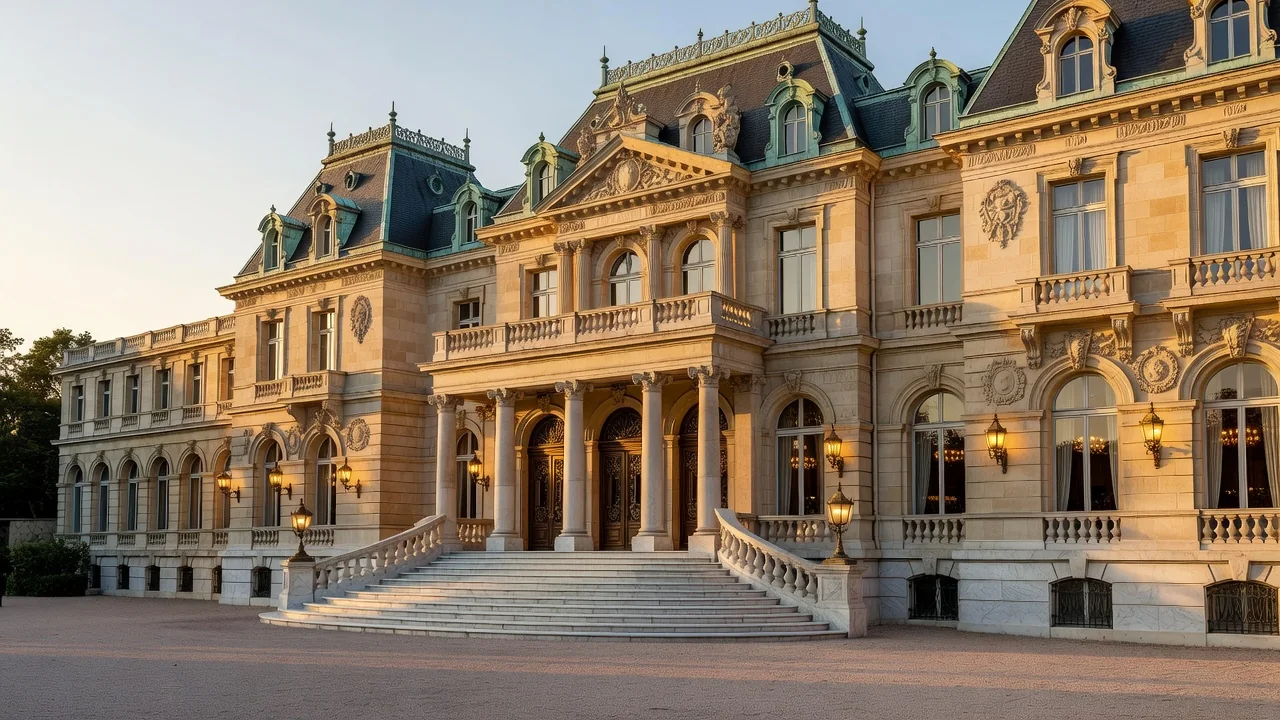
In 1863 the tiny, bankrupt Principality of Monaco licensed François Blanc — the operator who had made Bad Homburg famous — to build a casino on a barren plateau. Within two decades the Casino de Monte-Carlo was paying the entire Monegasque state budget, and Charles Garnier’s Belle Époque palace had defined what “casino” means visually to this day.
Monaco also codified the exclusivity playbook: citizens banned from the tables, high minimums, formal dress — gambling as theatre for the wealthy. Every European casino since has positioned itself somewhere on the spectrum Monte-Carlo defined.
The 20th Century: Legalisation and the Modern Floor
Europe spent the 20th century legalising what it had long practised. France permitted casinos in spa and seaside towns in 1907; Britain’s 1960 Betting and Gaming Act created the licensed club scene that eventually produced venues like the Hippodrome; Portugal’s Estoril — Europe’s largest — opened in 1931 and spent the war years hosting spies, exiled royals and, reportedly, the inspirations for James Bond.
Finland took the civic route: a state monopoly whose casino profits fund health and social welfare, a model still visible at Casino Helsinki. The East followed after 1989 — Bucharest, Prague and the border-town phenomenon of Rozvadov, now home to King’s Resort and WSOP Europe.
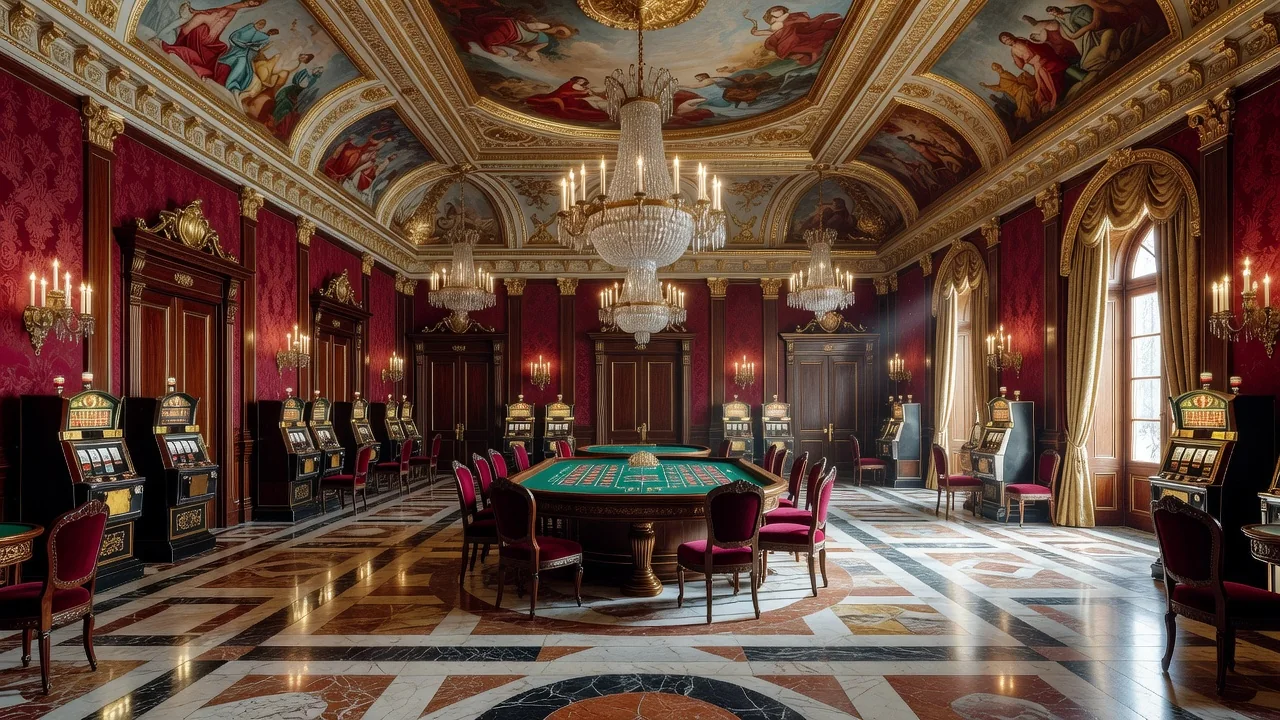
The 21st Century: Regulation, Online and the Integrated Resort
Today’s European gambling map is defined by licensed online markets, strict responsible-gambling rules and land-based venues reinventing themselves as entertainment resorts — the shift we document in our report on the industry’s transformation. The casino Europe invented is now the continent’s most carefully regulated form of entertainment.
Why the History Still Matters
Walk into Baden-Baden or the Ridotto’s Venetian successor and you are inside a working museum — the rituals, the architecture, even the games are artefacts. That depth is Europe’s unique selling point, and it is why the venues on this site reward slow, curious travel. Plan the route with our 2026 travel guide — and wherever you play, check the current terms at the door, as entry rules at the historic houses change with the seasons.